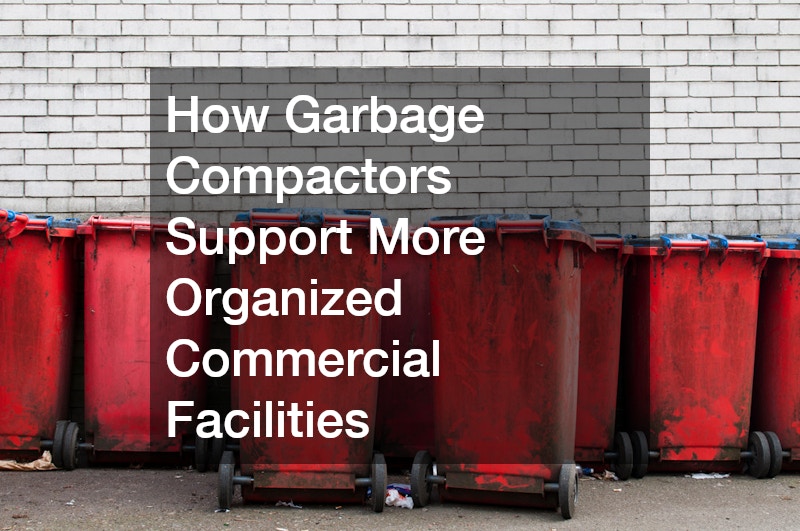
How Garbage Compactors Support More Organized Commercial Facilities
Introduction
In today’s fast-paced commercial environments, maintaining organization and efficiency is a top priority. Essential to this goal is the effective management of waste, a process that is significantly enhanced by the use of garbage compactors. These powerful devices not only streamline waste disposal but also contribute to a cleaner, safer, and more organized facility.
The modern commercial facility faces constant challenges in managing diverse waste streams. By investing in garbage compactors, businesses can efficiently handle these waste materials. This ensures that garbage doesn’t clutter valuable workspace, enhancing both productivity and hygiene.
Furthermore, garbage compactors play a pivotal role in improving sustainability efforts. By compacting waste, the volume of trash sent to landfills is reduced, supporting eco-friendly practices. As we venture further into the age of sustainability, the role of these machines in waste management becomes ever more critical.
Impact on Waste Management
Garbage compactors serve as fundamental tools in waste management within commercial facilities. Their primary function is to significantly reduce the volume of waste by compressing it, which facilitates easier storage and disposal. This capacity to compact waste minimises the need for multiple trash bins, thereby freeing up valuable space within a facility.
In addition to saving space, garbage compactors significantly cut down on disposal costs. Since compacted waste takes up less space, fewer trips to disposal sites are needed, which reduces fuel consumption and labor costs. For large-scale commercial operations, these reductions can translate into substantial financial savings over time.
Moreover, using garbage compactors helps in maintaining a cleaner environment by minimizing odor and pest problems. When waste is compressed and contained, it limits exposure to air and pests, thereby reducing potential health and safety issues. This contributes to maintaining a high-standard, reputable image for any commercial facility.
Impact on Facility Organization
One of the critical aspects of a successful commercial operation is maintaining a well-organized facility. Garbage compactors assist in achieving this by centralizing waste management processes, thereby decluttering the premises. This results in a more efficient and visually appealing workspace, which can boost employee morale and productivity.
The integration of compactors into daily operations also streamlines handling procedures. Employees spend less time managing waste due to the centralized nature of compacted trash, allowing them to focus on more important tasks. This efficiency leads to an increase in operational throughput and enhances the overall workflow.
Additionally, compactors contribute to simplifying logistics within the facility. By reducing the frequency of waste collection and disposal, they help facilities better allocate resources and time. This logistical advantage empowers businesses to focus more on core objectives and less on day-to-day waste management concerns.
Impact on the Environmental and Finances
Garbage compactors are not only tools of organization but also play a significant role in promoting environmental responsibility. By reducing the volume of waste, compactors decrease the overall quantity of rubbish being transported and disposed of in landfills. This reduction is crucial in lessening the environmental footprint, a key priority for modern businesses.
Furthermore, the economic benefits of garbage compactors extend beyond waste management. These devices lessen the number of waste collection trips required, which in turn reduces fuel and transportation expenses. Additionally, by lowering the frequency and volume of waste disposal, companies can negotiate better rates with waste management services.
The cumulative effect of these savings can be substantial over time. Businesses can reallocate these funds towards more sustainable practices or other operational improvements. Garbage compactors, therefore, not only support organizational efficiency but also offer a gateway to greater economic and environmental sustainability.
Garbage compactors are invaluable assets to any commercial facility’s operational toolkit. They provide a multitude of benefits ranging from enhanced facility organization to significant environmental and economic advantages. By investing in garbage compactors, businesses can ensure a more efficient, responsible, and sustainable future.
Incorporating garbage compactors into the waste management strategy means cleaner workspaces and a higher standard of operational efficiency. Many facilities are already reaping the rewards of these machines, demonstrating their value and effectiveness. Moving forward, their role in creating orderly, efficient, and environmentally conscious commercial spaces will only become more pronounced.
Thus, for any commercial facility seeking to optimize operations and reduce its environmental impact, garbage compactors prove to be an indispensable tool. They align with both the practical needs of the business and socially responsible environmental practices. As the industry evolves, embracing these changes is not just beneficial but imperative.