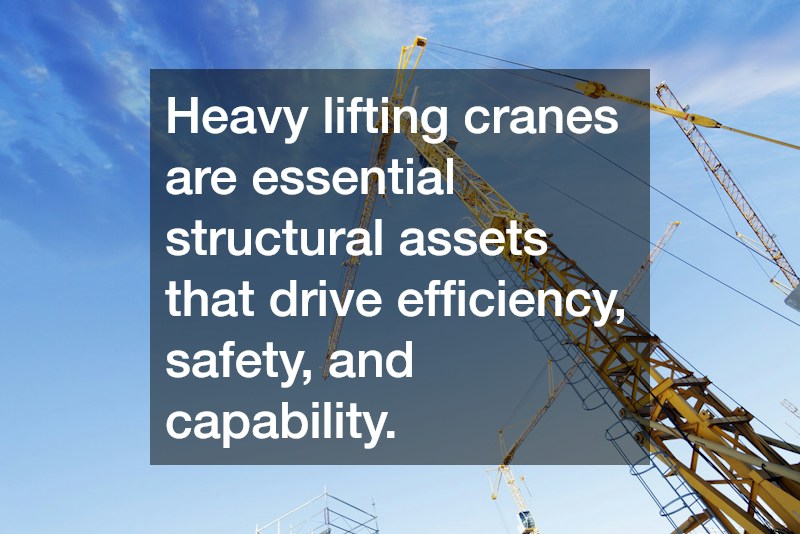

The construction industry relies heavily on heavy-lifting cranes to ensure site efficiency, structural integrity, and worker safety. These specialized machines are indispensable for moving massive structural steel, concrete panels, and heavy machinery across expansive job sites.
Selecting the proper crane architecture depends on load capacities, vertical reach, site mobility, ground stability, and project timelines.
Core Types of Heavy Lifting Cranes
Different construction environments demand specialized crane configurations to overcome spatial, structural, and terrain constraints:
-
Mobile Cranes: Mounted on wheeled chassis or commercial truck beds, mobile cranes offer rapid deployment and high road mobility between job sites. Equipped with hydraulic telescopic booms, they excel at short-term, high-impact lifting tasks in congested urban settings where setup space is limited.
-
Tower Cranes: Anchored permanently to a concrete foundation or tied directly to a building’s rising core, tower cranes dominate high-rise vertical construction. Featuring a tall vertical mast and horizontal jib, they provide unparalleled height and radius coverage, handling heavy structural materials hundreds of feet above ground level.
-
Crawler Cranes: Built on heavy steel track systems, crawler cranes deliver superior stability and high lifting capacities without requiring outriggers. The wide footprint of their tracks distributes ground pressure evenly, allowing them to navigate soft, uneven, or unpaved terrain while carrying suspended loads (“pick-and-carry” operations).
-
Rough-Terrain & All-Terrain Cranes: Featuring high ground clearance, wide-stance outriggers, and all-wheel drive, these mobile variants bridge the gap between high-speed highway transit and heavy off-road lifting capabilities.
Critical Factors for Selecting the Right Crane
Rigging engineers and project managers evaluate several technical variables before specifying a crane for a job site:
1. Load Weight and Radii Requirements
Every lift requires detailed load chart analysis. Engineers calculate the maximum load weight alongside the required lifting radius (the horizontal distance from the center of rotation to the load hook) and maximum tip height. Exceeding a crane’s rated capacity at a specific radius risks structural failure or tipping.
2. Ground Conditions and Site Accessibility
The ground bearing capacity (GBC) determines whether a site can support the combined weight of the crane, counterweights, and suspended load. Soft soil requires engineered crane mats, steel plates, or specialized outrigger pads to prevent sinking. Additionally, site access routes, overhead power line clearances, and turning radii dictate whether a mobile, crawler, or fixed tower crane can be physically delivered and assembled.
3. Total Operational Costs and Project Duration
Short-term projects benefit from mobile cranes due to minimal setup and breakdown times. Conversely, multi-year high-rise projects justify the higher mobilization, assembly, and disassembly costs of tower cranes or large lattice-boom crawlers.
Safety Protocols and Job Site Risk Mitigation
Safe crane operation demands a combination of strict regulatory compliance, certified personnel, and proactive equipment maintenance:
-
Rigorous Personnel Certification: Operators, riggers, and signal persons must hold verified credentials (such as NCCCO certifications) and undergo regular site-specific safety orientations.
-
Routine Inspections and Maintenance: Daily pre-shift inspections focus on wire rope integrity, hydraulic line pressure, hook latches, outrigger cylinders, and braking systems. Periodic third-party structural audits ensure safety compliance under OSHA and ASME standards.
-
Site Safety Controls: Establishing strict swing-radius exclusion zones with physical barriers prevents ground personnel from entering blind spots. Clear communication protocols using standardized hand signals or dedicated two-way radio channels are mandatory during all lifts.
Technological Innovations in Modern Cranes
Modern cranes incorporate advanced digital systems to enhance lifting precision, fleet management, and operator safety:
-
Integrated Telematics and Load Moment Indicators (LMI): LMIs utilize real-time sensors to continuously calculate load weight, boom angle, and radius, automatically warning the operator or locking controls if limits are approached. Telematics systems track fuel consumption, engine hours, and mechanical wear remotely.
-
Automation and Remote Control Operation: High-definition camera arrays and wireless remote consoles allow operators to manage complex lifts from safe ground-level vantage points, eliminating blind spots and keeping personnel out of hazardous zones.
-
Smart Sensor Arrays: Proximity sensors and anti-collision software prevent crane booms from contacting adjacent structures, overhead utilities, or secondary cranes operating on the same job site.
Heavy lifting cranes are essential structural assets that drive efficiency, safety, and capability across modern construction projects. By matching specific crane architectures—such as mobile, tower, or crawler units—to job site load demands, site terrain, and project timelines, construction teams optimize operational productivity while mitigating severe risks. As building designs grow taller and more complex, integrating advanced telematics, automated safety features, and rigorous site protocols ensures that crane operations remain safe, efficient, and environmentally responsible.